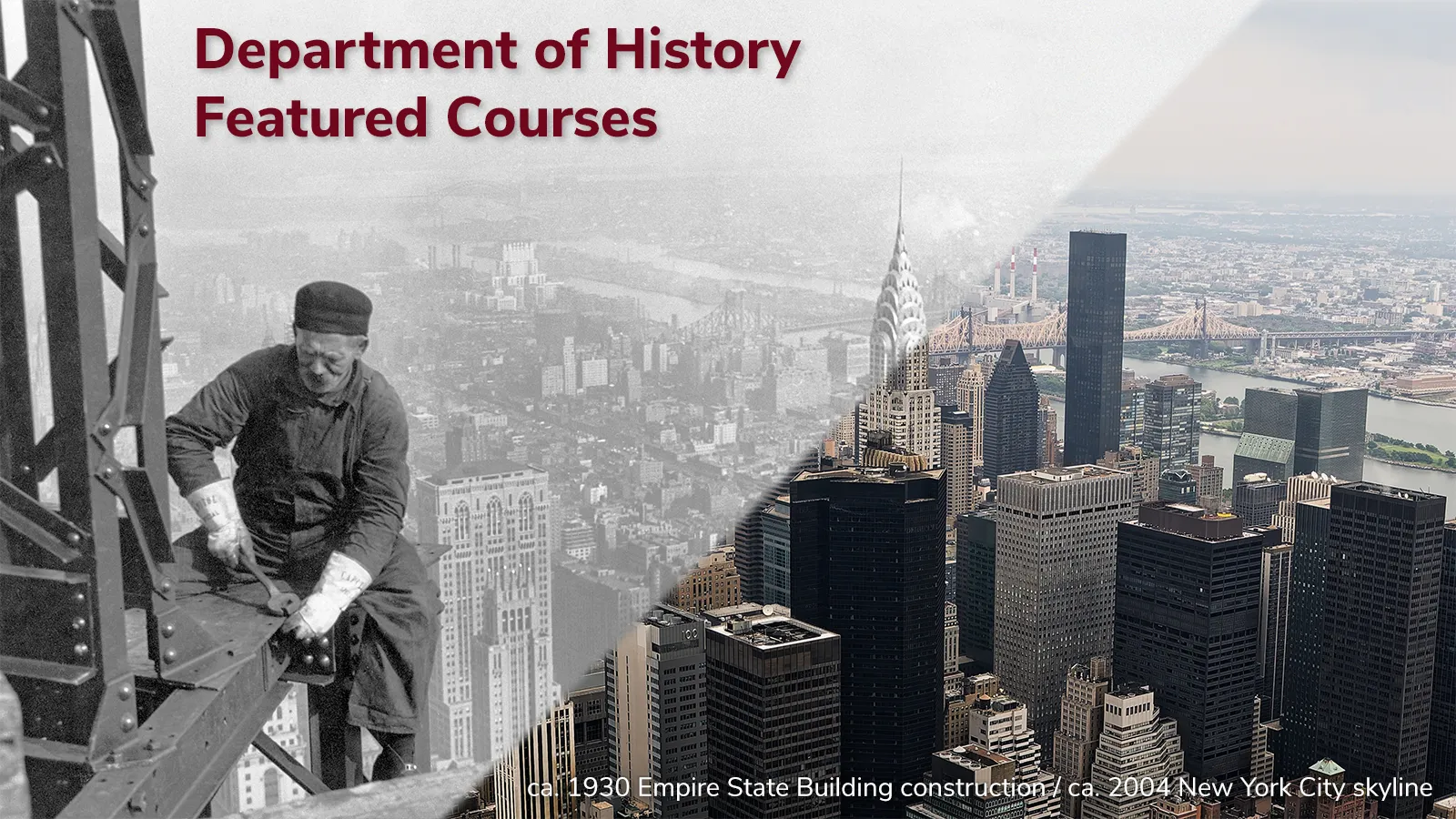
Featured Courses
HISTORY 2453
History of Zionism and Modern Israel
History of Zionist movement and the modern state of Israel from beginnings to present
This course explores the history of Modern Israel from the rise of the Zionist movement to the present. It begins by examining the social and ideological roots of Zionism in late 19th-century Europe, proceeds with the development of the Jewish community in Palestine under Ottoman and British rule, and then turns to the period following the establishment of the State of Israel in 1948. Among the issues to be discussed are Jewish-Arab relations, migration, the encounter between European and Middle Eastern Jews, the creation of a new Hebrew identity, the interaction between religion and state, the impact of the Holocaust, ethnic conflict and social protest, war and diplomacy, and struggles over the judiciary and the nature of the regime. Course materials include secondary historical sources, a variety of primary documents, literature, and films.
Autumn 2026 Session
Section #27323
Full Session | In Person
Ori Yehudai, Associate Professor and Schottenstein Chair in Israel Studies
Not open to students with credit for JewshSt 2453.
HISTORY 3040
The American City
History of the American city (urban-suburban) from colonial times to the early 21st century
Since World War II, suburban growth has dramatically reshaped the ways Americans have related to their government, the physical environment, and to one another. In this era, many Americans have championed suburbs as important symbols of economic success, sites of marital bliss, and “safe” spaces to raise a family. At the same time, many critics have derided them as places full of unhappy marriages and overly materialistic, conformity-driven people. This class will explore the social, cultural, and political history of U.S. suburbs and cities since 1945, and it will pay particular attention to the ways in which Americans have made sense of suburbanization. Topics will include the debates over the government’s role in housing, racial segregation and the “urban crisis,” youth culture, the War on Drugs, gentrification, Wal-Mart and the “new economy,” immigrant suburbs, and the 2008 economic crash.
Autumn 2026 Session
Section #24813
Full Session | In Person
Clayton Howard, Associate Professor
HISTORY 3084
Citizens Behind Bars
Citizens Behind Bars is a reading and writing intensive course that examines the history of citizenship in captivity and the long tradition of liberatory movements led by incarcerated people in the United States. Students explore how policing, imprisonment, and racialized exclusion have shaped U.S. democracy from the colonial period to the present. Course materials center historical texts, podcasts, documentaries, and archival videos, alongside close analysis of primary writings by incarcerated authors from the American Prison Writing Archive (APWA). These sources illuminate how Black, Indigenous, Latinx, and Asian people have confronted criminalization, loss of rights, and state violence across generations — and how leaders in captivity have theorized freedom and challenged the boundaries of democratic belonging. By the end of this course, students will be able to analyze primary sources from incarcerated writers, interpret the historical forces shaping U.S. carceral citizenship, and articulate how movements led from behind bars have transformed national conversations about democracy and freedom.
Autumn 2026 Session
Section #28715
Full Session | Online
DeAnza Cook, Assistant Professor
Not open to students with credit for AfAmASt 3084 or WGSSt 3084.
HISTORY 3376
The Silk Road: Cross-Cultural Exchanges in Eurasian History
A study of the commercial and cultural relations among Chinese, Indian, Iranian, and Roman/Islamic civilizations
This course examines the premodern history of the Silk Road trade routes that have connected the diverse cultures of Afro-Eurasia since before Antiquity. Focusing on commercial and cultural relations between people on the steppes, in oasis cities, and within changing empires, this course illuminates the transregional exchange of commodities and ideas across the land routes from prehistory to 1498 CE. Combining the study of written accounts (in English translation) and material artifacts recovered from Central Asia, Iran, China, India, Anatolia, Egypt, Greece, and Rome, this course examines the history of exchange and movement that characterized the premodern Silk Road.
Autumn 2026 Session
Section #36317
Full Session | Hybrid
Amanda Respess, Assistant Professor