
2025-2027 Schedule
Bridging Global Lenses on Servitude & Unfree Labor:
From Ancient Times to the Present
This series is offered in conjunction with America 250 and is cosponsored by the following units:
- American Indian Studies
- Center for Latin American Studies
- College of Arts and Sciences
- Department of African American and African Studies
- Department of Political Science
- Department of Women's, Gender and Sexuality Studies
- The Humanities Institute
Autumn 2026 Schedule
"Slavery, Labor, & Unfreedom in the Age of the American Revolution"
Panel 1: Bondage & Resistance During the Revolutionary Period
Date & Time:
- Monday, September 14, 2026
- 4:45 pm - 6:30 pm
Location:
- 0014 University Hall
Panelists:
- Beatriz Carolina Peña, Queens College
- Bradley Craig, Boston University
Moderator:
- Ryan Fontanilla
"From Campeche to Boston: Manuel Jala and an Afro-Mexican Challenge to Colonial Slavery"
Abstract:

In January 1709, Manuel Jala, a free Afro-Mexican sailor from Campeche, appeared before the authorities of colonial Massachusetts to prevent his sale into slavery. Captured during imperial warfare in the Gulf of Mexico and illegally sold in New York, Jala spent years in bondage before bringing his case to Boston. This presentation reconstructs his remarkable journey from freedom to enslavement and examines the legal arguments advanced on his behalf. Drawing on petitions, court records, and maritime documents, I argue that Jala’s case reveals a little-known pattern in the Atlantic world: the enslavement of free Afro-Spanish men in British North America. At the center of the story is a sophisticated attack on slavery grounded in natural law, the law of nations, and Christian principles of liberty. The presentation also explores the likely involvement of Samuel Sewall, author of The Selling of Joseph (1700), the first antislavery tract printed in British North America. By recovering Jala’s struggle for freedom, this talk highlights the role of Afro-descended people not merely as victims of slavery but as active participants in its early legal and ideological challenge.
About Beatriz Carolina Peña:
Beatriz Carolina Peña specializes in colonial Latin American studies, with a later focus on race, slavery, and maritime worlds in the early modern Atlantic. She is the author of nine books, including seven award-winning monographs originally published in Spanish and two expanded English-language editions published in 2025. Her work on the early colonial Andes has received major awards in Peru, Mexico, Cuba, Spain, and the United States.
Her research on the eighteenth-century Spanish Caribbean and British America has also earned international recognition, including the 2023 Willi Paul Adams Award from the Organization of American Historians and two Gold Medals for Best Academic Themed Book from the International Latino Book Awards. Her most recent publications examine Afro-Spanish and Indigenous mariners captured and enslaved in the English colonies, recovering overlooked histories of race, empire, and resistance in the Atlantic world.
Her work has been supported by the John Carter Brown Library and the CUNY Black, Race, and Ethnic Studies Initiative (BRESI). In 2025, she received the Alumni Achievement Award from The Graduate Center, CUNY, becoming the first recipient from the Ph.D. Program in Latin American, Iberian, and Latino Cultures (LAILAC) to receive this distinction.
"Temporality, Text, and Borders: The American Revolution in Black Atlantic History"
Abstract:
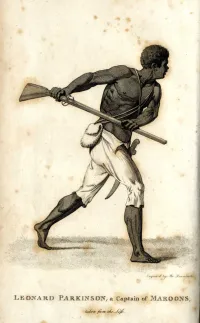
In recent years, public and scholarly attention has returned to the role of slavery and the agency of the enslaved in the history of the American Revolution. In light of the semisesquicentennial, this presentation considers the history and legacies of the American Revolution from the perspective of Black Atlantic studies. By revisiting the major questions and debates about slavery and the Revolution in light of trans-Atlantic histories of Black marronage, rebellion, and revolution in the long eighteenth-century, it reconsiders three main themes in American Revolutionary studies: borders, founding documents, and the nature of historical time. An emphasis on space, text, and temporality grounded in a study of Black Atlantic marronage, rebellion, and revolution promises to reorient the historiography of the American Revolution toward the enduring practices of unfreedom that undergird the afterlives of slavery and colonialism.
About Bradley Craig:
Bradley L. Craig is an assistant professor of history and African American and Black Diaspora Studies at Boston University, where he teaches courses on Black Atlantic and African American history, historical memory, and gender and sexuality studies. After receiving a PhD in African and African American Studies at Harvard University, he was a Barra postdoctoral fellow at the McNeil Center for Early American Studies and assistant professor of history at Concordia University (Montreal). His writing has been published or is forthcoming in Eighteenth-Century Studies, Religious Studies Review, and the edited volume American Violence: Histories, Structures, and Legacies.
Panel 2: Challenging Unfreedom & Political Violence In the Age of Revolutions
Date & Time:
- Monday, September 28, 2026
- 4:45 pm - 6:30 pm
Location:
- 0014 University Hall
Cosponsored by the Mershon Center for International Security Studies and the Kirwan Institute.
Panelists:
- Paul Barba, Bucknell University
- Leila Blackbird, Presidential Postdoctoral Fellow, Department of History, Brown University
Moderator:
- Chris Nichols
"All Who Cannot Be Taken Had Better Be Shot By the Creek Indians: Muscogees, Marronage, and the Contested Meanings of the American Revolution"
Abstract:
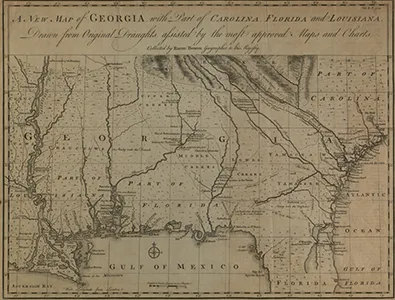
On March 14, 1776, just four months before Continental rebels signed their declaration of independence from the British Crown, Col. Stephen Bull worked feverishly to curtail a parallel movement for autonomy among a group of two-hundred or so fugitive slaves congregated on Tybee Island. “The matter is this,” he wrote to South Carolina Council of Safety President Henry Laurens. “It is far better for the public and owners, if the deserted negroes on Tybee Island… be shot, if they cannot be taken.” This was, as far as Bull was concerned, the only measure the Continentals could take if they wanted to prevent “our own money or property” from enlisting among the enemy British. But he also added an extra wrinkle to his plan: “all who cannot be taken, had better be shot by the Creek Indians, as it perhaps, may deter other negroes from deserting.” In other words, Bull saw the Tybee crisis as an opportunity to solidify Continental rule within the boundaries of South Carolina and well beyond. Who were these “willing and desirous” Muscogees? How prevalent was their slave hunting within the Revolutionary Era? And what do their experiences and actions reveal about the larger meanings of the American Revolution—of the pursuits of freedom, autonomy, and independence—across and beyond Native country? This presentation thus explores how Indigenous histories often complicate and disrupt both popular and scholarly representations of the American Revolution.
About Paul Barba:
Paul Barba (Ph.D., U.C. Santa Barbara) is an associate professor of history and affiliate faculty of Critical Black Studies at Bucknell University. He is the author of the prize-winning book, Country of the Cursed and the Driven: Slavery and the Texas Borderlands (University of Nebraska Press, 2021), and the editor of Gulf South Rebels, Insurgents, and Revolutionaries, 1700-1860: Bonds of Rebellion (Palgrave Macmillan, 2025). He also is co-editor of the University of Nebraska Press series Borderlands and Transcultural Studies and the Bloomsbury Publishing series Understanding Marronage: Critical and Cross-Disciplinary Engagements.
"Reproducing Empire: Gender, Political Ecologies, and Indigenous Slavery in the Revolutionary Gulf South"
Abstract:
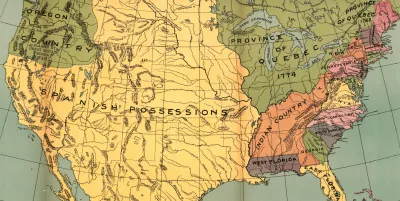
In the winter of 1765–66, two French traders trafficked Indigenous captives from Pawnee territory down the Red River into the lands of the Atakapa, including a young girl of eleven years and five months of age. By the time she arrived, Angélique's small body was visibly pregnant—a consequence of her captivity. Although she did not survive, her daughter, grandchildren, and great-grandchildren remained enslaved through Louisiana's transition from French to Spanish rule and its incorporation into the nascent United States. What does the history of one enslaved family reveal about the larger meanings of the American Revolution in the Gulf South?
The enslavement of Indigenous women and girls was central to the reproduction of empire. As ecologies were remade through captive-taking, plantation expansion, and the redrawing of imperial borders, colonial regimes simultaneously sought to reorganize Indigenous kinship and land through racial reclassification and the hereditary transmission of enslaved status. Political, environmental, and gendered violence were not separate processes but, instead, mutually constitutive projects meant to secure colonial claims to land, labor, and sovereignty. This presentation argues that, when viewed from the Gulf South, the American Revolution appears less as the birth of a nation than as an imperial transition that reproduced colonial power through the remaking of Indigenous political ecologies and kinship, revealing how political, environmental, and gendered violence became lived and embodied across generations.
About Leila K. Blackbird:
Leila K. Blackbird (Ph.D., Univ. of Chicago) is the Presidential Postdoctoral Research Fellow in History at Brown University, where she is currently working on her first book, Embodied Violence: Slavery and Settler Colonialism on America's Third Coast. Her research reinterprets the intertwined histories of settler colonialism and slavery in the Gulf South and has been featured in The Cambridge History of the American Revolution, Louisiana Creole Peoplehood, and What Is History, Now?, as well as in the journals Eighteenth-Century Studies, Scholarly Editing, and The William and Mary Quarterly. Her article, “‘It Has Always Been Customary to Make Slaves of Savages’: The Problem of Indian Slavery in Spanish Louisiana Revisited, 1769–1803,” received the Omohundro Institute’s New Voices Award.
Panel 3: Imperial Contentions & Environmental Factors of Labor & Servitude in the Revolutionary Atlantic
Date & Time:
- Monday, October 12, 2026
- 4:45 pm - 6:30 pm
Location:
- 0014 University Hall
Panelists:
- Arianne Urus, Vanderbilt University
- Vivien Tejada, UCLA
Moderator:
- Jen Eaglin
"Fishing Rights for a New Nation: Newfoundland Cod and the Crisis of Empire, 1778-1783"
Abstract:
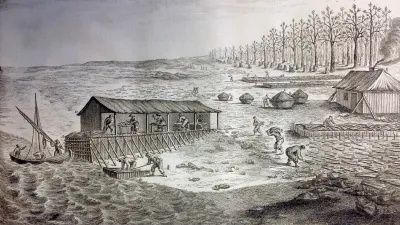
Drawing on environmental and legal history, this paper builds on my book manuscript on the history of the Newfoundland cod fisheries in the eighteenth century. It examines the role the fisheries played in the American Revolution. Indeed, the French joined the war in 1778 in no small part to regain fishing rights in British-controlled Newfoundland that they had lost dating to 1763. From the American side, Massachusetts, in particular, had a stake in what happened to fishing rights in Newfoundland. Ships from Boston and nearby ports had long sent fishing crews there exercising their rights as British subjects, and merchants prospered from sending provisions (both licitly and illicitly) to the island. With rupture with the British Empire on the horizon, the Americans wanted to maintain their right to fish and trade in Newfoundland even if they were no longer British subjects. While the alliance between the French and the Americans ultimately frayed, the cod fishery and the tangled claims to it nevertheless played an unexpected role in geopolitics of this period (at one point John Adams even had a commemorative seal made of a cod fish). The paper contextualizes this moment as part of a broader transformation of the relationship between empire, environment, and property.
About Arianne Sedef Urus:
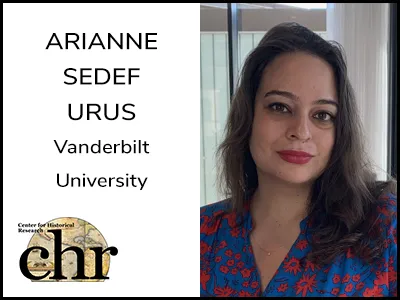
Arianne Sedef Urus is an assistant professor at Vanderbilt University, where she teaches Atlantic, early American, early modern European, legal, and environmental history. She is a historian of empire, law, and the environment in the early modern Atlantic World. Her research examines the connections between geopolitics, capitalism, and the non-human world. She is currently working on a book, Common Shores: A Political Ecology of the Eighteenth-Century Newfoundland Cod Fisheries (under contract with the University of Pennsylvania Press), about interimperial resource management regimes and Franco-British competition over the Newfoundland cod fisheries in the eighteenth century. This study of the Newfoundland fishery shows a different model of empire-building in the Atlantic World to that which historians have previously identified, premised on the strategic sharing of natural resources rather than exclusive possession of them. Moreover, this model was not one crafted purely at the imperial center, but rather was the product of interactions from top to bottom, across cultures, across national imperial regimes, and across oceans. Articles based on this research have appeared in Environmental History and in Law and History Review.
Urus's latest research project, Ottoman Florida, looks at the failed eighteenth-century British colony of New Smyrna in East Florida to explore how questions of environmental justice between British, Spanish, Ottoman, and Muscogee Creek inhabitants intersected with ideas about climate and wider interimperial geopolitics.
Prior to coming to Vanderbilt, Urus was Assistant Professor of Early American History at Cambridge, where she was a fellow of Christ’s College, and the Barra Postdoctoral Fellow at the McNeil Center for Early American Studies at Penn.
"In a Country Where Slavery Is Forbidden”: Slavery, Conquest, and the United States Army in Indian Country"
Abstract:
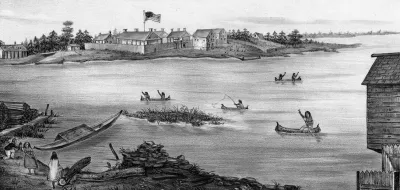
During the early nineteenth century, the United States army turned to slavery to maintain hierarchies of race, class, and gender in the nation’s borderlands. The Department of War sanctioned officers’ slaveholding through its body-servant policy, which subsidized the use of enslaved servants. Officers and their wives, in turn, enlisted the labor of the people they enslaved to domesticate the nation’s hinterlands. At the same time, the use of slave labor at military posts exposed the army’s weaknesses to Native and non-Native observers as slaveholding officers entrenched a system of unfree labor that undermined the federal government’s expressed visions for the region. This talk uses a pair of freedom suits lodged against army officers in the 1830s to examine the contours of army slavery. While the two freedom seekers gained their freedom by turning the army’s demand for mobile labor against the officers who enslaved them, their cases did little to dislodge the institution of army slavery.
About Vivien Tejada:
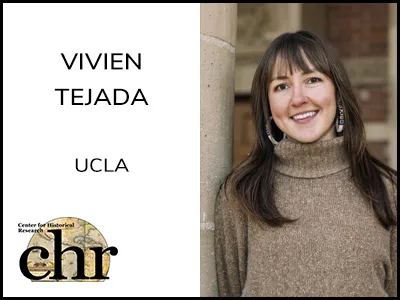
Vivien Tejada is an Assistant Professor of History at UCLA and an enrolled citizen of the Cherokee Nation. Her book manuscript, Unfree Soil: Indigenous North America and the Coming of the Civil War, argues that the federal government utilized slave labor to colonize the Upper Midwest. She received the 2026 McNeil Center for Early American Studies dissertation prize for this research.
Panel 4: Childhood & Children’s Servitude in Revolutionary America
Date & Time:
- Monday, October 26, 2026
- 4:45 pm - 6:30 pm
Location:
- Virtual via Zoom
Cosponsored by the Department of English.
Panelists:
- Nazera Sadiq Wright, University of Kentucky
- Ruth Wallis Herndon, Bowling Green University
- Crystal Webster Sheffield, University of British Columbia
Moderator:
- Elizabeth Dillenburg
"Black Girls and Their Libraries: Educational Manuals and Literary Access in Early America"
Abstract:
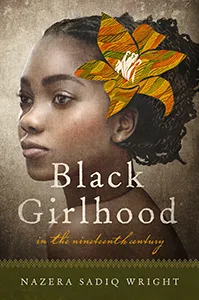
This paper examines early Black writers’ incorporation of educational manuals into their texts, including reference books, penmanship guides, copybooks, and spelling books. I argue that these instructional texts functioned as informal libraries through which Black girls in the eighteenth and nineteenth centuries gained literacy, cultivated intellectual authority, and accessed knowledge. By reconceptualizing educational manuals as libraries, this paper reveals how Black girls engaged portable collections of texts that shaped their development as readers and writers.
As a case study, I examine Phillis Wheatley’s iconic girlhood image in the frontispiece to her 1773 collection of poems. While Wheatley inaugurated the Black American literary tradition and the Black women’s literary tradition through the publication of her poetry, she also established an important visual tradition linking Black girlhood, literacy, and library access. Wheatley’s frontispiece models visually what early American penmanship manuals taught theoretically. Her poised posture, writing implements, and manuscript page signal expertise of the handwriting practices that eighteenth-century educational manuals sought to cultivate.
Reading Wheatley’s frontispiece alongside early penmanship and instructional texts illuminates the informal libraries that shaped Black girls’ intellectual lives in the eighteenth and nineteenth centuries. The image conveys that a Black girl can be a scholar, a writer, and a practitioner of refined literary and penmanship skills, which were capacities that eighteenth-century culture often reserved for white men. To consider Wheatley as a writer and penwoman, learner and author is to recover the educational resources and library practices that enabled Black girls to claim literary authority. Wheatley made that authority visible to future generations, offering a model of Black girlhood grounded in literacy, learning, and intellectual achievement. Her image reveals that Black girls' libraries were not merely collections of books but sites where literary futures were imagined and made possible.
About Nazera Sadiq Wright:
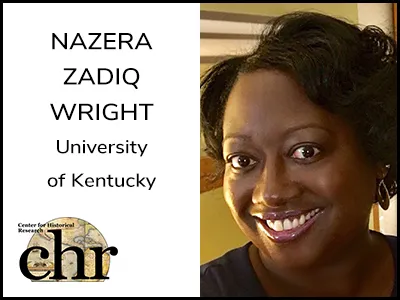
Dr. Nazera Sadiq Wright is an Associate Professor of English and African American and Africana Studies at the University of Kentucky. She is the author of Black Girlhood in the Nineteenth Century (University of Illinois Press, 2016), which won the 2018 Children’s Literature Association’s Honor Book Award for Outstanding Book of Literary Criticism. In 2019, she was elected to the American Antiquarian Society. Fellowships through the National Humanities Center, the Ford Foundation, the National Endowment for the Humanities, the Andrew W. Mellon Foundation, the Bibliographical Society of America, and the American Philosophical Society funded archival research for her second book manuscript in progress, Early African American Women Writers and Their Libraries, which is under contract with UNC Press.
"Indentured Child Laborers in Revolutionary Boston"
Abstract:
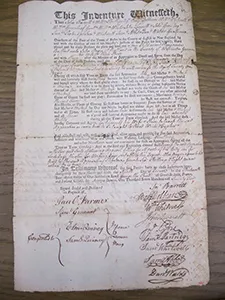
Pauper apprenticeship, a widespread practice in England and British North America in the 1600s and 1700s, took orphaned and poor children from their birth families and put them into the homes of more prosperous residents, where they would grow to adulthood. In exchange for the children’s daily labor, masters were expected to provide the necessities of life, plus basic work skills and rudimentary literacy education. Local magistrates wanted to keep these children off public welfare. Masters wanted to add a laborer to the household for 10-12 years (the average age at binding was 9). This presentation follows a cohort of 173 pauper apprentices who were bound out by Boston town magistrates before the Revolutionary War and set free by their masters during the war. The trail of evidence in the children’s indentures and other documents intersects repeatedly with well-known events of the American Revolution. Their stories suggest there is still much to learn about the ways Revolutionary events affected the lives of ordinary people in Boston and New England.
About Ruth Wallis Herndon:
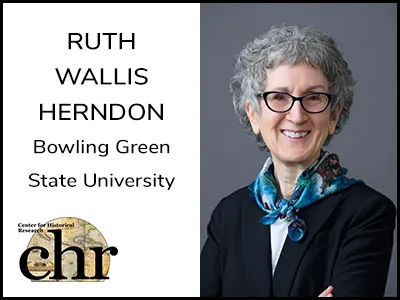
Ruth Wallis Herndon is Professor Emerita of History at Bowling Green State University. Her research field is early American social history, with a special focus on marginalized people. Her major publications include a monograph on the transient poor, Unwelcome Americans: Living on the Margin in Early New England (University of Pennsylvania Press, 2001) and an essay on women in the Boston Almshouse in the Journal of the Early Republic (2012). With Narragansett tribal ethnohistorian Ella Wilcox Sekatau, she co-authored several essays, including the prizewinning “The Right to a Name: The Narragansett People and Rhode Island Officials in the Revolutionary Era” in Ethnohistory (1997). With economic historian John E. Murray, she co-authored an essay on the political economy of pauper apprenticeship in the Journal of Economic History (2002) and the anthology Children Bound to Labor: Pauper Apprenticeship in Early America (Cornell University Press, 2009). Her current project, from which her CHE presentation is drawn, is “Children of Misfortune: The Fates of Boston’s Poor Apprentices,” which traces the lives of children bound out by Boston’s magistrates between 1678 and 1820.
"Black Children's Rage Against Criminalization as Abolitionist Praxis"
Abstract:
In this talk, I define rage as an intense expression of anger that, in these cases, was violent. Black children’s violence is far more expansive than what we as adults might consider to be immature and uncontrolled outbursts. Instead, I center Black child-rage as a category of analysis and argue that such a framework demonstrates radical rejections of criminalization.
The historical experiences of Black children and youth demonstrate how formative they were to the development of radical Black resistance and Black knowledge-production, particularly concerning decriminalization and abolitionism. Further, such a framework on Black child-rage allows us to look towards children and youth for a way to both reconcile with, and also mobilize from, the conditions of Blackness both historically and today, to which James Baldwin prophetically reflected, “To be a Negro in this country and to be relatively conscious is to be in a rage almost all the time.” Within this lens of focusing on the moments in which Black children abandoned restraint, in the face of and in spite of adult-centered ideas of self-control, rage becomes a constructive force and instructive method.
About Crystal Lynn Sheffield:
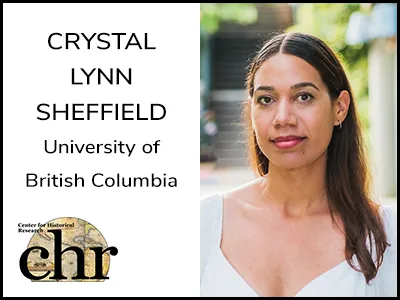
Crystal Lynn Sheffield is an award-winning historian and educator. She is Associate Professor of History at the University of British Columbia. Her research focuses on Black children in early America and has been supported by the Gilder Lehrman Center for the Study of Slavery, Resistance, and Abolition at Yale University, the Library Company of Philadelphia, the American Antiquarian Society, the Massachusetts Historical Society, and the Association for American University Women.
Her book, Beyond the Boundaries of Childhood: African American Children in the Antebellum North was published in 2021 by the University of North Carolina Press and won the biennial book prize by the Library Company of Philadelphia. She is currently completing her second book, Condemned: How America’s First Courts and Prisons Terrorized Black Children by The New Press. Additionally, her writing has appeared in the Washington Post and New York York Times.
Panel 5: The Meaning(s) of American Freedom in a Global Context
Date & Time:
- Monday, November 16, 2026
- 4:45 pm - 6:30 pm
Location:
- 0014 University Hall
Cosponsored by the Mershon Center for International Security Studies and the Kirwan Institute.
Panelists:
- Emily Sneff, Independent Scholar
- Adam McNeil, Notre Dame
Moderator:
- María Esther Hammack
"When the Declaration of Independence Was News"
Abstract:
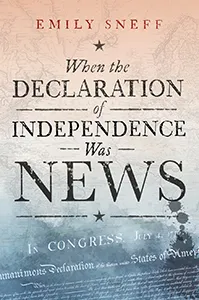
Highlighting research from her new book, Dr. Sneff will explore the dissemination of the Declaration around the Atlantic in the summer and fall of 1776. The Declaration was met with unique circumstances everywhere it went, and people modified and critiqued the text along the way. The questions of who experienced the news of independence, when, and how reveal an expansive and complex history of a critical moment in the American Revolution.
About Emily Sneff:
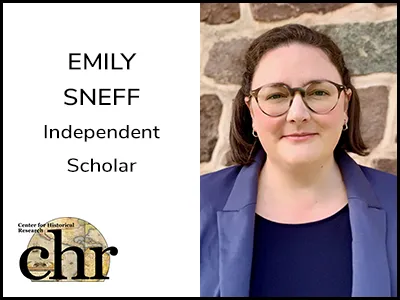
Dr. Emily Sneff is an early American historian and leading expert on the Declaration of Independence. She earned her Ph.D. in History from William & Mary. She is a consulting curator for exhibitions marking the 250th anniversary of the Declaration at the Museum of the American Revolution and Historic Trappe.
"Enslaved Afro-Virginian Women in a Revolutionary World"
Abstract:
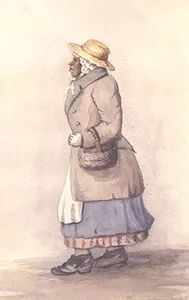
Virginia’s Royal Governor, Lord Dunmore, declared liberty to rebel-owned enslaved men willing to reach British lines and join his Ethiopian Regiment. Unbeknownst to Dunmore, hundreds of enslaved Afro-Virginian women joined his ranks over the next nine months. The American Revolution provided Black women the greatest chance to escape bondage until the U.S. Civil War. Joining Dunmore’s Black recruits, though, were numerous Loyalist owned enslaved women, whose enslavers left Virginia as opposed to remaining on land and sustaining assaults from Patriot forces and citizens of the Tidewater. “Loyalist-Owned Enslaved Afro-Virginian Women in a Revolutionary World,” explores the labors and lived experiences of enslaved women bound by White Loyalist-Virginians. My presentation will underscore how enslaved women’s labor contributed not only to socially reproducing the social worlds of their enslavers but also to how their presence behind British lines in British-controlled cities undermined the possibilities for Afro-Virginians voluntarily choosing to seek refuge behind British lines.
About Adam McNeil:
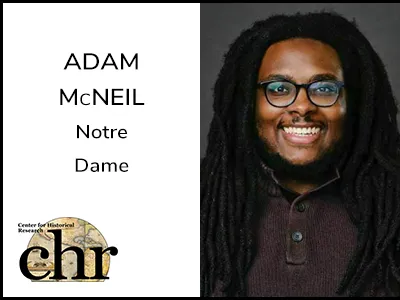
Adam Xavier McNeil is an Assistant Professor of American Studies in the Department of American Studies at the University of Notre Dame. McNeil is a historian of the American Revolution, with a focus on Black women's experiences in the Revolutionary and Founding Eras. He is currently writing his first monograph, Contested Liberty: Fugitive Women and the Shadow of Reenslavement and Displacement in Revolutionary Virginia, under contract with the University of Virginia Press. Contested Liberty is the first book to analyze Afro-Virginian women’s pursuit of freedom during the American Revolution. McNeil's scholarly contributions can also be found as a co-host of both New Books in African American Studies and New Books in Revolutionary America, podcasts platformed by the New Books Network.
Before coming to Notre Dame, McNeil was a postdoctoral research associate and lecturer at the University of Virginia's Carter G. Woodson Institute for African American and African Studies. McNeil also serves on the Editorial Board of the Journal of Black Military Studies and previously held leadership positions in the Association of Black Women's Historians and the African American Intellectual History Society.
Spring 2026 Schedule
“Bondage and Servitude Beyond the Americas”
Comparative Perspectives on Slavery, Bondage, and Resistance in Asia
Date/Time: Monday, February 23, 2026, 3:30-5:30 PM
Location: University Hall, Room 14
Panelists:
Jeff Eden, Associate Professor of History, Northwestern University
Sun Joo Kim, Harvard-Yenching Professor of Korean History, Harvard University
Moderator: Ahmad Sikainga, Professor of History, The Ohio State University
Sponsors: International Studies, the Mershon Center for International Security Studies, Department of East Asian Languages and Literatures, and the Hilandar Library
Note: This presentation will not be filmed.
Panel Abstract
This panel explores how enslaved individuals in nineteenth-century Central Asia and early modern Korea resisted their bondage and reshaped the trajectories of slavery in their regions.
Jeff Eden: Presentation Title and Abstract
"How Persian Slaves Freed Themselves in Nineteenth-Century Central Asia: Two Case-Studies of Emancipation"
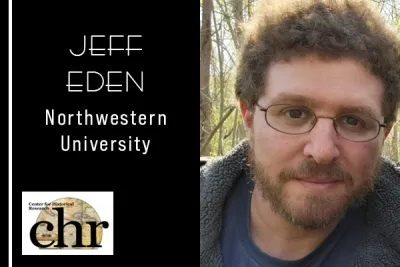
Presentation Abstract:
When the Russian Empire conquered Central Asia in the 1860s-1870s, the conquest was hailed across Europe as the event that ended Central Asia’s vast slave trade and liberated its slaves– a claim that has rarely, if ever, been challenged by historians. In this presentation, Jeff Eden challenges that claim through two dramatic case studies. The first case study shows how, on the eve of Russia’s conquest of the capital city of Khiva in 1873, the city’s slaves fomented the largest slave uprising in the region’s history, which prompted the abolition of slavery throughout Central Asia. The second case study reveals what happened to former slaves who escaped their Central Asian owners, fled to the Russian border, and sought protection from the purportedly “abolitionist” Tsar--only to find a surprising fate awaiting them.
About Jeff Eden:
Jeff Eden is Associate Professor of History at Northwestern University. His books include Slavery and Empire in Central Asia (Cambridge) and God Save the USSR: Soviet Muslims and the Second World War (Oxford).
Sun Joo Kim: Presentation Title and Abstract
"Slave Lives Matter: Runaway Slaves, Slave Hunting, and the State in Early Modern Korea"
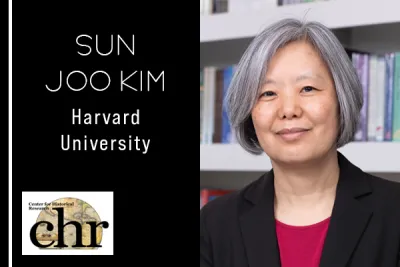
Abstract:
Slavery was a dominant socioeconomic system in Korea for several centuries until it began to spontaneously decline in the eighteenth century. This paper seeks to understand the two unique features of Korean slavery—its longevity and spontaneous decline—by analyzing the phenomenon of runaway slaves, which has a history as long as slavery itself. Early modern Korean slaves did not openly rebel against their owners or the state, which allowed slavery to persist and thrive. However, they consistently ran away from slavery. Some were successful, some were recaptured and returned to slavery, and some were killed while fleeing. Some scholars argue that the widespread fleeing caused the eventual decline of slavery. Others see it as passive resistance. This paper examines a few cases of runaway slaves, slave hunting, and the state’s efforts to curb the illegal use of violence resulting in the deaths of captured slaves. These cases illustrate how the recognition of slaves’ humanity inadvertently enabled the longevity of slavery while unleashing a slow process of the institution’s decline.
About Sun Joo Kim:
Sun Joo Kim is the Harvard-Yenching Professor of Korean History in the Department of East Asian Languages and Civilizations at Harvard University. She received a bachelor’s degree in history from Yonsei University in Korea and a master’s degree and Ph.D. in history from the University of Washington.
Her research focuses on the socio-cultural history of Chosŏn Korea (1392–1910). Both her college experience in 1980s Korea and a broad interest in the world history of revolutions and rebellions influenced her study of popular movements in nineteenth-century Korea, which in turn led her to analyze regional discrimination and the ways in which marginalized groups of people coped with their compromised conditions in history. Her interest in ordinary but forgotten people, including women, led her to study legal records that inadvertently preserved their voices. Other topics she has studied include slavery, kinship and genealogy, and art history. She is also dedicated to making underused yet illuminating primary sources available in English through conventional and digital publishing.
She is the author of several books. Her peer-reviewed articles have appeared in disciplinary journals such as Social History, Journal of Social History, and Historische Anthropologie, as well as in regional studies journals such as Journal of Asian Studies, Harvard Journal of Asiatic Studies, and Journal of Korean Studies. She has also published in the Korean-language journals. She is the recipient of various fellowships and grants, most notably the American Council of Learned Societies Collaborative Research Fellowship, the Korea Foundation Advanced Research Grant, and the Social Science Research Council Doctoral Research Fellowship.
"Classic yet Exceptional: Slave Societies of Medieval East Asia"
Date/Time: Monday, March 23, 2026, 4-5:30 PM
Location: University Hall, Room 14
Presenter: Don J. Wyatt, John M. McCardell, Jr. Distinguished Professor, Middlebury College
Co-sponsors: International Studies and the Department of East Asian Languages and Literatures
Abstract & Bio
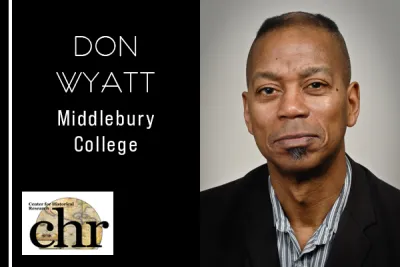
Abstract:
Writing in his influential Ancient Slavery and Modern Ideology, in identifying what he considered foremost to be the three foundational constituent elements of any slave society, the prominent classicist, Moses Finley posited that they were “the slave’s property status, the totality of the power over him, and his kinlessness.” The chief paradigm for Finley’s postulations was of course slave society as it had become articulated in the ancient civilizations of Greece and especially Rome. However, much of the potency of Finley’s thesis has rested in its applicability to the later iterations of slave society as it transpired in the West. Nevertheless, let it be noted that, in East Asia of medieval times, we witness noteworthy conformance to but also deviation from Finley’s theorization. Consequently, the slave societies of medieval East Asia serve well in illustrating how, between cultures and across time, the criteria for what constitutes a true slave society can oftentimes vary and deviate even quite profoundly from the assumed Western norm.
About Don J. Wyatt:
DON J. WYATT is the John M. McCardell, Jr. Distinguished Professor at Middlebury College. He attended Beloit College in Wisconsin, graduating Phi Beta Kappa with a B.A. in Religious Studies in 1975. He entered Harvard University’s Regional Studies-East Asia program in 1976, taking the M.A. in 1978 and thereafter continuing in the Department of East Asian Languages and Civilizations to receive the Ph.D. in 1984. At Middlebury since 1986, he has taught history as well as philosophy until the present. Specializing in the intellectual history of China, with research most currently focused on the intersections between identity and violence and the nexuses between ethnicity and slavery, Wyatt is the author of The Blacks of Premodern China (2010) and Slavery in East Asia (2022), with the latter being a contribution to the Cambridge Elements Global Middle Ages series. Just completed in the same series is Song China and the World (Cambridge University Press, forthcoming).
"The Political Economy of Serfdom: Servitude and State Formation in Imperial Russia"
Date/Time: Monday, April 13, 2026, 4-5:30 PM
Location: University Hall, Room 14
Presenter: Tracy K. Dennison, Edie and Lew Wasserman Professor of Social Science History and the Ronald and Maxine Linde Leadership Chair in the Division of the Humanities and Social Sciences, California Institute of Technology
Co-sponsor: International Studies
Abstract & Bio
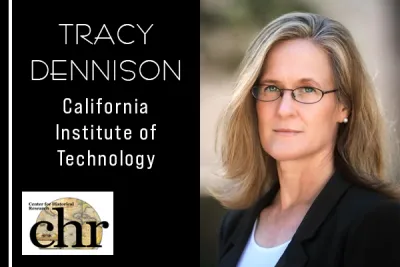
Abstract:
Serfdom is often viewed as a system of unfree labor where nobles and the state colluded to exploit the peasantry. On this view, the coercive powers of the state, especially state enforcement of mobility restrictions, are what made the system so oppressive. In this talk, the example of Russia is used to show that, in contrast to the conventional portrayal, serfdom existed where central states were weak. Serfdom was a concession to nobles by rulers, and serfdom waned as rulers grew stronger and centralized states emerged. Comparing the Russian case to western and central Europe (especially Prussia), we observe the importance of property rights and centrally controlled mechanisms for enforcement (such as royal courts) to state formation and, consequently, to emancipation and long-term economic and political development. The absence of these institutions in Russia – and the lack of “state capacity” – meant that emancipation was a less transformative event in that country than in other parts of Europe.
About Tracy Dennison:
Tracy Dennison is the Edie and Lew Wasserman Professor of Social Science History and currently holds the Ronald and Maxine Linde Leadership Chair in the Division of the Humanities and Social Sciences. Her research focuses on the way institutions such as property rights and dispute resolution mechanisms affected economic and political development in central and eastern Europe. She has published many articles about household structure, marriage patterns, and serfdom in comparative context, as well as on the relationship between history and the quantitative social sciences. Her first book The Institutional Framework of Russian Serfdom was published by Cambridge University Press in 2011. Dennison is currently working on a book about the political economy of serfdom and origins of the rule of law in Europe.
Autumn 2025 Schedule
"Servitude, Slavery, & Gender Before the Age of Explorations"
Comparative Perspectives on Slavery Before the Age of Exploration
YouTube Video:
SoundCloud Podcast:
Date/Time: Monday, October 6, 2025, 3:30-5:30 PM
Panelists:
Peter Hunt, Professor of Classics, University of Colorado-Boulder
Gabriel Kruell, Research Associate, Institute of Historical Research at National Autonomous University of Mexico
Paloma Martinez-Cruz, Professor of Latino/a Cultural and Literary Studies, The Ohio State University
Moderator: Bert Harrill, Professor of History, The Ohio State University
Co-sponsors: International Studies, the Center for Folklore Studies, the Humanities Institute, the Department of Classics, and the Center for Latin American Studies
Location: Journalism Building, Room 360, 242 W. 18th Ave., Columbus
Location Map
Parking Information
Panel Abstract
This panel will contextualize slavery and unfreedom before the age of explorations highlighting various early geographies and communities from the classical world to the Americas. It will cover key aspects that shaped servitude and link to how these materialized through class, gender, culture and law lenses.
Peter Hunt: Presentation Title and Abstract
“How is the Water for Running Away? The Gender of Fugitive Slaves in the Classical World”
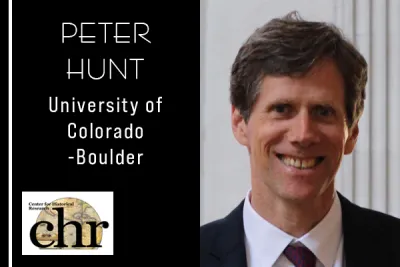
Abstract:
Modern studies suggest that enslaved men were more likely to try to escape slavery than women. Evidence from papyri and “slave collars” confirms that this was also the case in the classical world. This talk will examine the reasons for this disparity in the ancient world and will focus on the gendering of space and work.
About Peter Hunt:
Peter Hunt (M.A. CU Boulder 1988, Ph.D. Stanford 1994), a classical Greek historian, studies warfare and society, slavery, historiography and oratory. His first book, Slaves, Warfare, and Ideology in the Greek Historians (Cambridge 1998), discerns a conflict between the extent of slave and Helot participation in Greek warfare and the representation of their role in contemporary historians. His second book War, Peace, and Alliance in Demosthenes' Athens (Cambridge 2010), uses the evidence of deliberative oratory as evidence for Athenian thinking and feelings about foreign relations. His third book, a survey on Ancient Greek and Roman Slavery, came out from Wiley Blackwell in 2018. In addition to various articles and reviews, he has contributed chapters to The Oxford Handbook of Demosthenes, The Oxford Handbook of Thucydides, The Cambridge History of Greek and Roman Warfare, The Cambridge World History of Slavery, and The Cambridge History of the World. Among other current projects, he is beginning work on a commentary on Plutarch’s Phocion.
Gabriel Kruell: Presentation Title and Abstract
"Tlacoyotl: Pre-Hispanic Slavery among the Mexica"
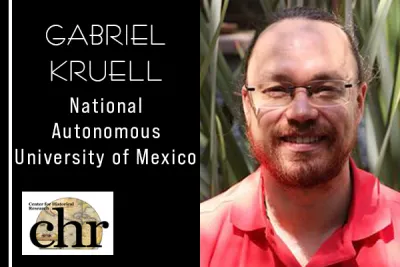
Presentation Abstract:
This presentation explores the institution of tlacoyotl, a form of slavery practiced among the Mexica (Aztecs) and other Nahua-speaking peoples prior to the Spanish conquest. Far from resembling the racialized and hereditary slavery systems imposed during the colonial period, tlacoyotl was a socially and legally regulated status that could result from debt, punishment, warfare, or poverty-induced voluntary servitude. Drawing on primary sources such as the colonial codices and Indigenous annals, the work examines the multiple pathways into and out of slavery, the various forms of tlacoyotl practiced by the Mexica, the rights and obligations of enslaved individuals and theirs owners, and the broader sociopolitical functions of the tlacotin (slaves) within Mexica society. The analysis further highlights the nuanced role of slavery in daily life, ritual practice, tribute systems, and economic exchange. By situating tlacoyotl within its cultural and legal context, the presentation aims to challenge modern assumptions about slavery and to contribute to a more complex understanding of pre-Hispanic history and Mesoamerican social structures.
About Gabriel Kruell:
Gabriel Kenrick Kruell is a full-time Associate Researcher (Investigador Asociado C) at the Instituto de Investigaciones Históricas, Universidad Nacional Autónoma de México (UNAM). In 2015 he earned his Ph.D. in Mesoamerican Studies from the same Mexican university. His research focuses on the historiography and philology of Nahua texts, particularly the Crónica Mexicayotl and the elusive Crónica X. Dr. Kruell has contributed to the understanding of colonial-era Indigenous narratives. Notably, his co-authored article with Sylvie Peperstraete, "Determining the Authorship of the Crónica Mexicayotl: Two Hypotheses," published in The Americas (2014), offers critical insights into the authorship debates surrounding this pivotal text. In Mexico his scholarly excellence has been recognized with several honors, including the Alfonso Caso Medal from UNAM (2011), an honorable mention for the Francisco Javier Clavijero Prize for best doctoral thesis (2016), and the Best Review in Cultural History Award from the Comité Mexicano de Ciencias Históricas (2020).
Paloma Martinez-Cruz: Presentation Title and Abstract
"Women Healers of Tenochtitlan: Mexica Rites and Female Warriors"
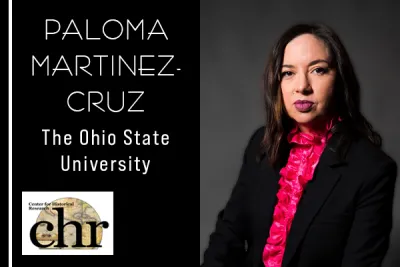
Presentation Abstract:
Medicine women among the Mexica publicly pursued medical knowledge, held offices of liturgical and spiritual authority, and championed women’s ways of knowing in the arena of civic ritual. However, their prospects as women thinkers were obstructed by the paradigm of masculine warriorhood that dominated the Mexica culture during its Postclassic period. Women healers were not only physicians, but also the national defenders of a feminine knowledge base that warriors attempted to appropriate and manipulate toward their own ends. This presentation explores how women articulated their own ways of knowing through a repertoire of state and household-level rituals that transmitted gender-specific knowledge systems and protected feminine medical specialization from encroachment by the warrior paradigm.
About Paloma Martinez-Cruz:
Paloma Martinez-Cruz is an interdisciplinary scholar in the field of Latinx cultural studies. Her work interrogates the consequences of colonization and patriarchal orderings across diverse expressive cultures of the Americas. A professor of Latinx Cultural Studies in the Departments of Spanish and Portuguese and English at The Ohio State University, she is the author of Trust the Circle: The Resistance and Resilience of Rubén Castilla Herrera (2023), Food Fight! Millennial Mestizaje Meets the Culinary Marketplace (2019), Women and Knowledge in Mesoamerica: From East L.A. to Anahuac (2011) and the editor of A Handbook for the Rebel Artist in a Post-Democratic Society by Guillermo Gómez-Peña and Saúl García-López (2021).
An interdisciplinary scholar-artist, Martinez-Cruz publishes poetry and fiction, and directs and performs with the Taco Reparations Brigade performance project that has recently been featured at the Columbus Museum of Art, Thompson Library Gallery, the Wexner Center for the Arts, the Latinx Dance Educator’s Alliance Convivencia and elsewhere. She coordinates Onda Latinx Ohio, a BIPOC arts initiative showcasing Latinx community arts practices that prioritize radical inclusion through primera voz opportunities for artists and performers at all levels and ages.
"Global Moral Order, Local Legalities, and the Gendered 'Business' of Slavery in the Late Ottoman Empire"
YouTube Video:
SoundCloud Podcast:
Date/Time: Monday, November 3, 2025, 4-5:30 PM
Presenter: Ceyda Karamursel, Lecturer in the Department of History at SOAS, University of London
Location: Journalism Building, Room 360, 242 W. 18th Ave., Columbus
Location Map
Parking Information
Co-sponsors: International Studies, the Hilandar Library, the Mershon Center for International Security Studies, the Center for Ethics and Human Values, and the Department of Near Eastern and South Asian Languages and Cultures
Abstract and Bio
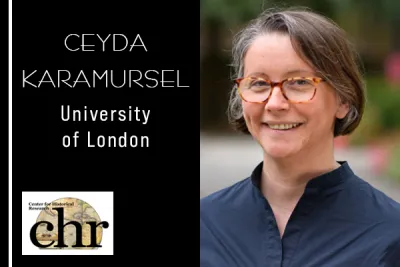
Abstract:
Shaped by successive military and diplomatic conflicts, the second half of the nineteenth century witnessed large-scale forced displacement across the Ottoman Middle East. With it came a protracted crisis that unsettled established legal and ethical frameworks, producing a volatile environment in which the slave trade persisted and adapted, even as formal efforts to suppress it were put in place. This paper focuses on a key moment in this prolonged crisis—the Russo-Ottoman War of 1877–78 and its aftermath—to examine the practices of Ottoman slaveholders and traders, many of them women, operating at various scales, from elite mistresses to small intermediaries. In doing so, it sheds light on how local structures and practices—social, economic, and legal—collided with the emerging global moral order that reframed legal distinctions of race, ethnicity, religion, and state-belonging, with long-term implications for the decades that followed.
About Ceyda Karamursel:
Ceyda Karamursel is Lecturer (Assistant Professor) in the Department of History at SOAS, University of London. Her research focuses on slavery and the contested meanings of freedom in the late Ottoman Empire. Her work has been supported by the Social Science Research Council, the Charlotte W. Newcombe Foundation, and the American Council of Learned Societies, and has appeared in the Journal of Women’s History, Comparative Studies in Society and History, International Journal of Middle East Studies, and Gender & History, among others. She is currently completing a book titled The Sack and the Bowstring: A Global History of Ottoman Slavery and Freedom.
“'My name is Arneid': Nobility, Thralldom, and Human Trafficking in the Viking Age"
YouTube Video:
SoundCloud Podcast:
Date/Time: Monday, December 1, 2025, 4-5:30 PM
Presenter: Christopher Paolella, Valencia College
Co-sponsor: International Studies and the Department of Germanic Languages and Literatures
Location: Journalism Building, Room 360, 242 W. 18th Ave., Columbus
Location Map
Parking Information
Abstract
Abstract:
In the summer of 874 CE, Vikings burned the halls of Asbjorn Skerryblaze, Jarl of the “Southern Isles,” the Hebrides. The raiders killed the jarl and his companions, but only after they enslaved the women and children of the jarl’s household. One of those enslaved was Asbjorn’s young daughter, Arneid. In a single night, Arneid lost her family, her home, and her nobility, freedom, and honor, but this was not the end of her story. Arneid survived the brutality, isolation, and despair of enslavement to find love, wealth, and honor regained; she would become a central figure in one of the most important families in eastern Iceland during the Viking Age. Yet, we know almost nothing about her. Arneid appears briefly in only two sources, Landnámabók and Droplaugarson Saga, and to date, she has received little scholarly attention. This lecture explores Arneid’s world and considers themes of honor and shame, and of nobility and slavery. It follows her incredible journey across the stormy North Sea from the Southern Isles to the interior of Scandinavia, and then to Reydarfjord in eastern Iceland. Hers is a story of a tragic fall and a dramatic rise.