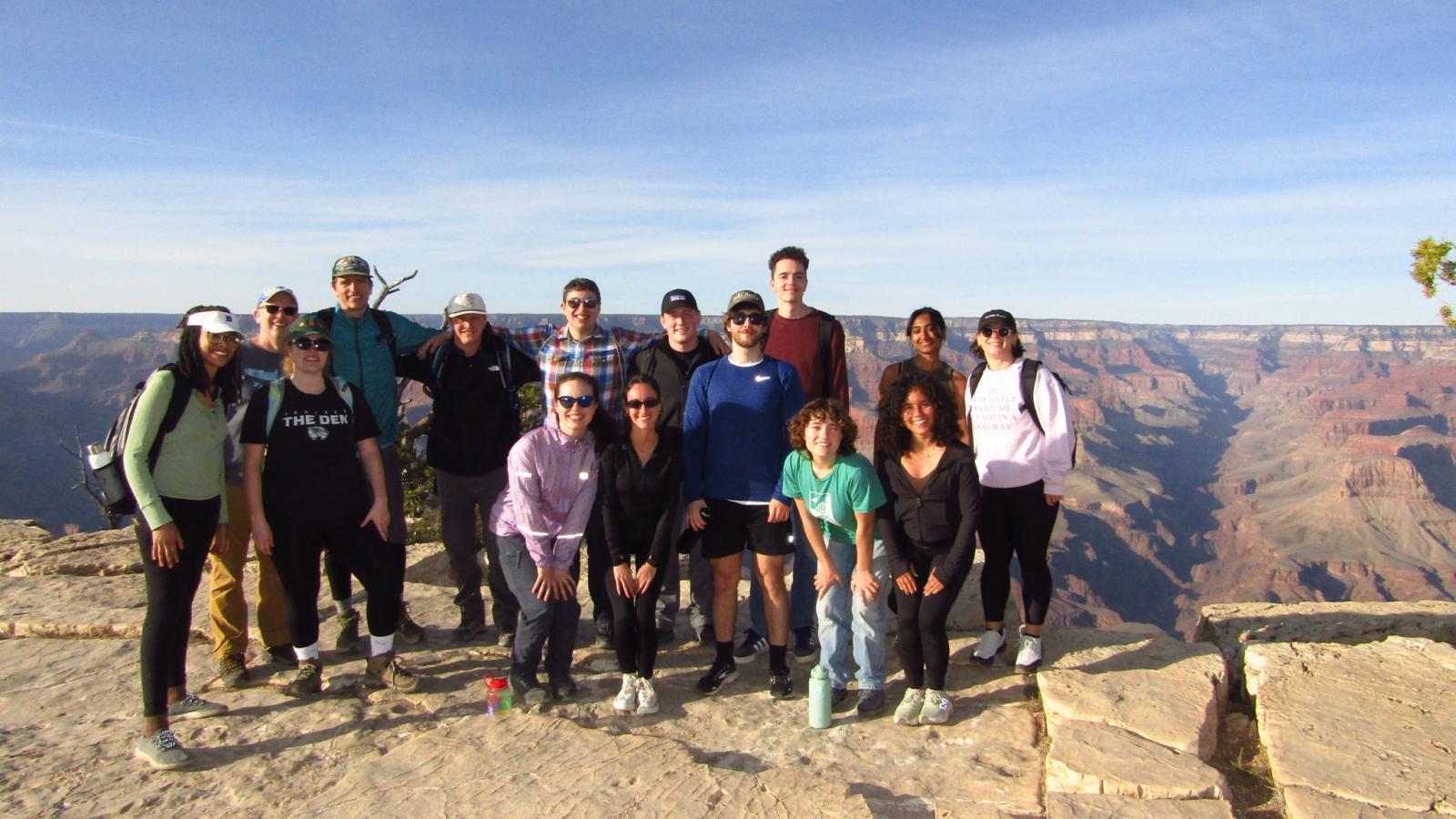
Environmental History Initiative Field School
This Environmental History Initiative Field School is designed for students who are passionate about the environment, U.S. History, and National Parks. Students interested will learn about the history of National Parks in the United States, how they were founded, when, by whom, and how they have changed over time. At the end of the 1-credit, 7-week course, students will participate in a Spring Break trip to the American West and visit the National Parks they've studied in the course.


In 2025, environmental history professors Jennifer Eaglin, Nicholas Breyfogle, and Bart Elmore took undergraduate and graduate students on the first Environmental History Initiative Field School in the American West, where they visited the Hoover Dam, the Grand Canyon, Bryce National Park, and Zion National Park.
What Our Students Have To Say
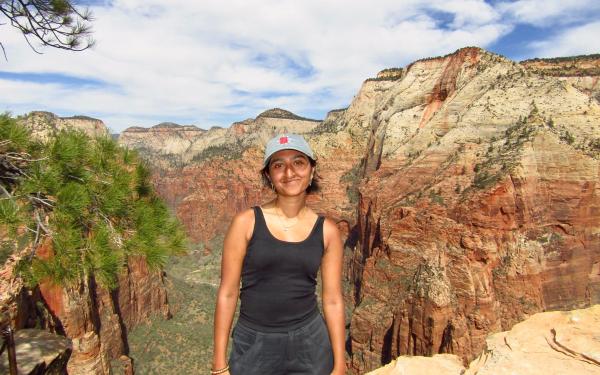
It was interesting to hear how engineers and officials designed and constructed the Hoover Dam before the invention of modern engineering tools used to ensure safety and structural integrity. Engineers and officials truly thought they were doing what was best for the region at the time, but in the decades following its construction, many environmental repercussions came to light, including the livelihood of indigenous communities pushed out of their homes, and the understanding that the dam might not have been the most efficient solution after all. The magnitude of this decision made nearly a hundred years ago could only truly be felt in person. - Bareesh Sanghavi, Class of 28' Aerospace Engineering Major
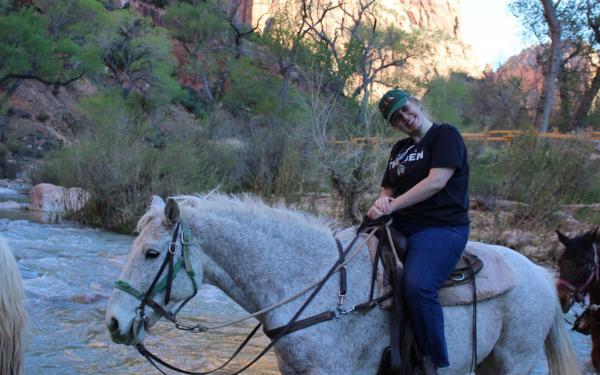
During this field school, I observed a master class by Profs. Breyfogle and Elmore on cultivating hands-on student learning. I learned how to mentor students’ learning on an individual level, especially as the undergraduate students experienced the environmental history of the American West firsthand. My time during field school greatly shaped my pedagogical approach to teaching undergraduate students by deepening my appreciation for experiential learning. - Tara Godwin, History MA Graduate Student
What Our Students Have To Say
It was interesting to hear how engineers and officials designed and constructed the Hoover Dam before the invention of modern engineering tools used to ensure safety and structural integrity. Engineers and officials truly thought they were doing what was best for the region at the time, but in the decades following its construction, many environmental repercussions came to light, including the livelihood of indigenous communities pushed out of their homes, and the understanding that the dam might not have been the most efficient solution after all. The magnitude of this decision made nearly a hundred years ago could only truly be felt in person. - Bareesh Sanghavi, Class of 28' Aerospace Engineering Major
During this field school, I observed a master class by Profs. Breyfogle and Elmore on cultivating hands-on student learning. I learned how to mentor students’ learning on an individual level, especially as the undergraduate students experienced the environmental history of the American West firsthand. My time during field school greatly shaped my pedagogical approach to teaching undergraduate students by deepening my appreciation for experiential learning. - Tara Godwin, History MA Graduate Student
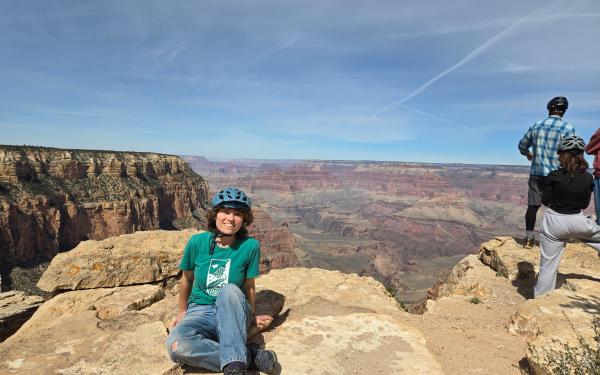
This trip reinvigorated my curiosity for the world, and reminded me why I wanted to study environmental science in the first place… These places are alive, and have so much detail that can’t be explained without seeing it. You don’t realize all the little ways that Ohio is different from the West until you’re there, seeing the sand and the sagebrush. You can’t feel the scale of a place like the Grand Canyon without being there in person, and you can’t feel the complexity of the human conflicts in the West without meeting different people out there, either. I feel like I learned more by talking to the park rangers, native people, and all the people who guided us on this trip than I’ve learned in multiple semesters of school. - Anna Elfers, Class of 28' Environmental Science Major
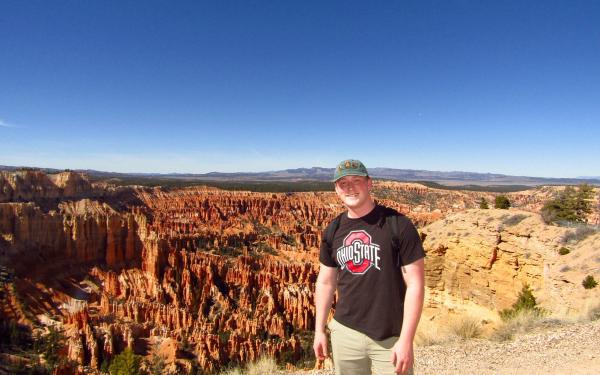
As a computer engineering student, I spend most of my time in the world of programming, mathematics, and technical problem-solving. This trip challenged me to slow down and engage with the world in a completely different way. Standing at the south rim of the Grand Canyon completely changed my sense of scale and perspective. Nothing I had seen in pictures prepared me for that moment. I left with a deeper respect for environmental history and look forward to learning more about it in the future. - Dylan Burke, Class of 26' Computer Engineering Major
This trip reinvigorated my curiosity for the world, and reminded me why I wanted to study environmental science in the first place… These places are alive, and have so much detail that can’t be explained without seeing it. You don’t realize all the little ways that Ohio is different from the West until you’re there, seeing the sand and the sagebrush. You can’t feel the scale of a place like the Grand Canyon without being there in person, and you can’t feel the complexity of the human conflicts in the West without meeting different people out there, either. I feel like I learned more by talking to the park rangers, native people, and all the people who guided us on this trip than I’ve learned in multiple semesters of school. - Anna Elfers, Class of 28' Environmental Science Major
As a computer engineering student, I spend most of my time in the world of programming, mathematics, and technical problem-solving. This trip challenged me to slow down and engage with the world in a completely different way. Standing at the south rim of the Grand Canyon completely changed my sense of scale and perspective. Nothing I had seen in pictures prepared me for that moment. I left with a deeper respect for environmental history and look forward to learning more about it in the future. - Dylan Burke, Class of 26' Computer Engineering Major