


This talk uses photographic postcards of Paris infrastructures to visualize the main arguments of Paris After Haussmann: Living with Infrastructure in the City of Light, 1870–1914 (University of Pittsburgh Press, 2026). Modern Paris is often hailed as a capital of urban infrastructure following Georges-Eugène Haussmann’s 1853–1870 rebuilding, branded as “Haussmannization,” which helped define urban modernity for cities worldwide. But expanding and modernizing infrastructure left some Parisians behind: as late as 1928, 18 percent of houses still lacked direct sewerage. Haussmannization often hid infrastructures behind walls and floors, under streets, or in peripheral districts. For four decades after 1870, during “secondary Haussmannization,” Parisians inverted infrastructures—revealing their hidden components to scrutinize their workings and costs for society, environment, and health—and in turn politicized them. Paris After Haussmann charts the diverse embodied, emotional, and everyday experiences of living with expanding urban infrastructures from 1870 to 1914, which taught Parisians that infrastructures were no simple technical solutions for the problems of city life but also brought about new dangers and dependencies.
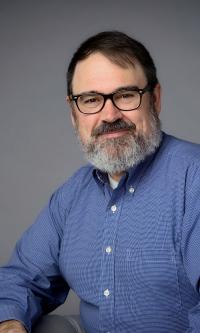
Peter Soppelsa - Associate Professor, Department of History of Science, Technology, and Medicine
University of Oklahoma
Peter S. Soppelsa is an associate professor in the Department of History of Science, Technology, and Medicine at the University of Oklahoma. His research combines environmental and urban history with the history of technology to explore the past of infrastructures, animals, mobilities, and public health in modern European and global history. He is the author of Paris After Haussmann: Living with Infrastructure in the City of Light, 1870-1914 (University of Pittsburgh Press, 2026), and is currently working on a second book project entitled Losing the Global War on Rats.
